The Kobuk River in northwest Alaska is widely regarded as the premier destination for sheefish fishing in Alaska, particularly for anglers interested in guided fly fishing for sheefish in a truly remote wilderness setting. Known for producing some of the largest sheefish in the world, the Kobuk River offers a rare combination of trophy fishing, intact Arctic ecosystems, and deep wilderness immersion.
Many anglers struggle to find a destination that combines exceptional freshwater fishing with solitude and unspoiled landscapes. Kobuk River sheefish fishing solves that problem. This guide explores why the Kobuk River is a world-class sheefish fishery, what to expect on guided float trips, and the biology and behavior of sheefish. It also covers the best time to fish, essential preparation and gear, and the broader wilderness experience that defines this remote Alaska fishing trip.
Why Choose the Kobuk River for Sheefish Fishing in Alaska
The Kobuk River stands apart as one of the most productive and consistent sheefish fishing destinations in Alaska, thanks to its unique geography, food-rich ecosystem, and limited fishing pressure.
What Makes the Kobuk River a World-Class Sheefish Fishing Destination
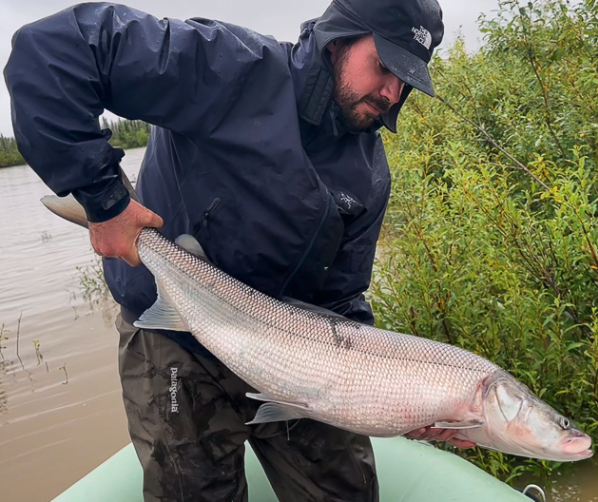
The Kobuk River is renowned for trophy-sized sheefish, with some specimens exceeding 50 pounds. These exceptional fish owe their size and strength to the marine-influenced ecosystem of Hotham Inlet, where Kobuk sheefish spend much of their lives feeding before migrating upriver.
As with many Arctic marine ecosystems, Hotham Inlet supports abundant forage, from plankton and invertebrates to large populations of baitfish. This food base allows sheefish to grow rapidly and reach sizes rarely seen elsewhere, creating unmatched opportunities for fly fishing sheefish on the Kobuk River.
How the Kobuk River Ecosystem Produces Trophy Sheefish
Sheefish begin life in the gravel substrates of the upper Kobuk River, particularly near the confluence with the Pah River. After hatching, juvenile fish are carried downstream during spring runoff and initially feed on aquatic insects.
Once sheefish reach approximately ten inches in length, they shift to an almost exclusively piscivorous diet. The abundance of small fish in Hotham Inlet fuels this growth, forming the foundation of the Kobuk River’s remarkable sheefish population and its reputation for Arctic freshwater fishing at the highest level.
Guided Kobuk River Sheefish Fishing Trips
Guided Kobuk River sheefish fishing trips combine exceptional angling with an immersive wilderness float experience in one of Alaska’s most remote river corridors.
What to Expect on a Guided Kobuk River Float Trip
Guests can expect productive fishing days, expansive scenery, and simple but comfortable riverside camps. Meals are prepared around campfires, with snacks available throughout the day. Coffee, tea, and filtered water are always on hand, while guests are welcome to bring additional beverages after coordinating weight limits in advance.
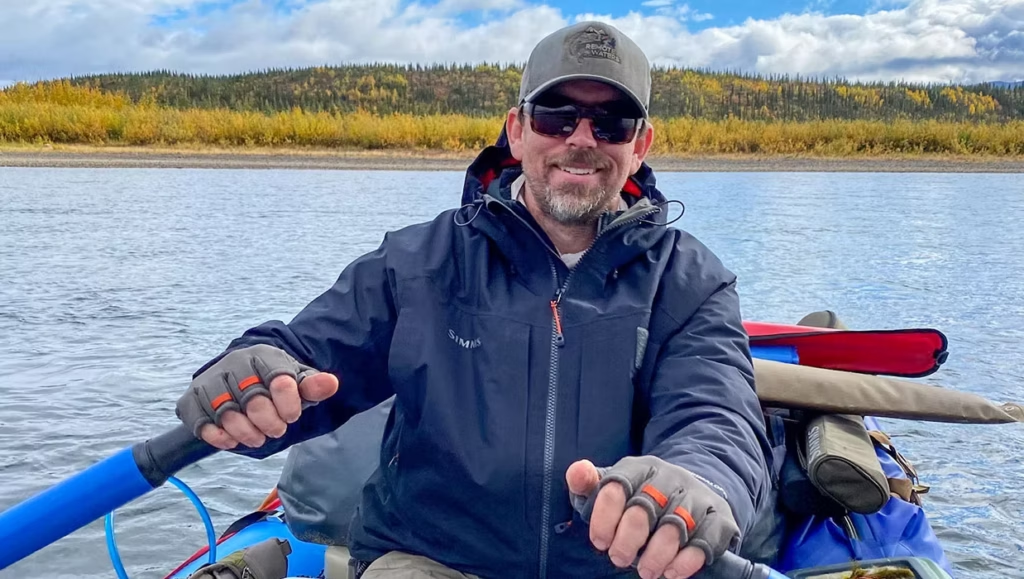
Wildlife encounters are unpredictable but common. Moose, black bears, and grizzly bears inhabit the river corridor, along with wolves, beavers, and a wide variety of bird species. This combination of fishing and wildlife viewing defines the character of a remote Alaska fishing trip on the Kobuk.
Types of Guided Trips Offered by Remote Waters
Remote Waters offers several guided Alaska fishing and wilderness float trips, including:
- Kobuk River Trips – Solitude, scenery, and trophy sheefish on an unforgettable Arctic float
- Ivishak River Trips – Premier Dolly Varden fishing beneath the peaks of the Arctic National Wildlife Refuge
- Marsh Fork Trips – Hiking, wildlife viewing, and birding on a classic North Slope wilderness float
- Aniak River Trips – Five species of salmon, trophy rainbow trout, Dolly Varden, and grayling
- Custom Trips – Tailored itineraries built around specific goals and interests
Small Groups and Authentic Wilderness Experiences
Remote Waters operates small-group trips that emphasize flexibility, authenticity, and attention to detail. Trip pacing, fishing emphasis, and camp routines are adapted to each group whenever possible. Dietary needs can be accommodated with advance notice, and careful logistics planning ensures a smooth, low-impact wilderness experience.
Sheefish Biology — The “Tarpon of the North”
The sheefish is often called the “Tarpon of the North,” a nickname earned through size, power, and fighting ability. Native to northern regions of Alaska, Canada, and Russia, sheefish are the world’s largest whitefish species and one of Alaska’s most impressive freshwater predators.
Sheefish Biology, Size, and Life Cycle
Sheefish are immediately recognizable by their large silvery scales, elongated bodies, and distinctive bucket-shaped mouths. Reaching weights of 50 pounds or more, they rank among the largest freshwater fish found in Alaska.
Although they spend much of their lives feeding in the brackish waters of Hotham Inlet, sheefish migrate upriver each summer to exploit seasonal food resources and spawn. Spawning fish travel nearly 200 miles upstream to reach gravel beds in the upper Kobuk River.
Unlike Pacific salmon, sheefish survive spawning. Reproduction occurs during a brief window in late September and early October, after which fish rapidly move back downstream toward Hotham Inlet.
Why Sheefish Are Called the Tarpon of the North
Sheefish are powerful, fast, and unpredictable on the fly. Their strength, endurance, and occasional surface thrashing draw frequent comparisons to tarpon, making them one of the most exciting targets in Arctic freshwater fishing.
Best Time to Fish for Sheefish on the Kobuk River
The best time to fish for sheefish on the Kobuk River is early August through mid-September, when fish concentrate in the upper river ahead of spawning.
Sheefish begin entering the river system in June as spring floodwaters recede. Remote Waters operates float trips on the upper Kobuk between Walker Lake and the village of Kobuk. Fish typically arrive near the Pah River in early August, marking the start of peak fishing.
As summer transitions into fall, sheefish steadily move upstream and gather in deep runs, tailouts, and back eddies.
Late August and early September often produce the highest concentrations of fish. Fishing remains productive into September for those prepared for colder Arctic conditions. Trips conclude by September 25 to avoid disturbing active spawning fish.
Preparing for a Kobuk River Wilderness Fishing Trip
Clothing
Quality rain gear is essential. Chest waders, wading boots, and a reliable rain or wading jacket provide protection from Alaska’s wet, raw weather. Layering with wool and synthetics is critical. A detailed packing checklist is available to ensure proper preparation for remote wilderness fishing in Alaska.
Insect Protection
Mosquitoes and biting insects are common during midsummer. Long sleeves, head nets with no-see-um mesh, and insect repellent are strongly recommended.
Wildlife Awareness
Bears and other wildlife are part of daily life on the Kobuk. Guests should be prepared for wildlife encounters and follow all safety protocols while camping and traveling.
Food and Beverages
All meals and snacks are provided, along with coffee, tea, and hot chocolate. Alcohol is not supplied but may be brought with advance coordination due to flight weight limits and community restrictions.
Communication and Safety
Cell service is extremely limited or nonexistent. Guides carry satellite phones and InReach devices for safety. Bear spray is provided, and strict food storage practices are followed. Guests are not permitted to carry firearms.
Essential Gear for Fly Fishing Sheefish
Rods, Reels, and Fly Lines for Sheefish
- Rods: 8- and 9-weight rods provide the backbone needed for large flies and powerful fish
- Reels: Quality disc-drag reels that balance well with the rod
- Fly Lines: Weight-forward floating lines paired with 7’–10’ fast-sinking tips
- Leaders: 20–30 lb mono or fluorocarbon; wire or heavy mono for pike
This setup is ideal for fly fishing sheefish on the Kobuk River, while remaining versatile for other species encountered during the trip.
Beyond Sheefish — The Kobuk River Wilderness Experience
Sheefish may be the draw, but the wilderness is what stays with most guests long after the trip ends. Flights into the upper Kobuk reveal the northern edge of Alaska’s boreal forest and the western flanks of the Brooks Range. Once on the river, travel slows to the pace of the current.
The Kobuk is largely a mellow float, offering time to explore gravel bars, photograph wildlife, and absorb the quiet of an Arctic wilderness float trip. Campsites are plentiful and comfortable, making evenings around the fire a highlight regardless of weather.
Sustainable, Low-Impact Guided Fishing with Remote Waters
Remote Waters prioritizes sustainable wilderness fishing by operating small groups, selecting durable campsites, and maintaining meticulous camp hygiene. These practices reduce environmental impact, minimize wildlife conflicts, and preserve the integrity of the river corridor. By limiting technology and encouraging presence, each trip fosters a deeper connection to the landscape and the experience itself.