
Wilderness Float Trips in Alaska’s Arctic National Wildlife Refuge
The Marsh Fork of the Canning River begins high in the eastern Brooks Range, flowing north through the Arctic National Wildlife Refuge. For nine days, this small spring- and snowmelt-fed river gives us a route through the mountains and access to country that would otherwise be difficult to reach.
We deliberately limit river travel to roughly 40 miles, keeping us in the mountainous upper river and leaving time to hike side valleys, climb tundra ridges, watch for wildlife, or spend another night at a good camp. Trips run from mid-June into early July, when daylight is nearly continuous and the Arctic summer is getting underway.
Remote Waters will offer two nine-day Marsh Fork / Canning River trips in 2027. Both follow the same route through the mountainous upper river, with time built into the schedule for hiking, wildlife observation, and exploring away from the river.
Dates
Length
Price per person
Availability
June 17–25, 2027
9 days / 8 nights
Length
9 days / 8 nights
$9,900
Price per person
$9,900
6 seats
Availability
6 seats
June 29–July 7, 2027
9 days / 8 nights
Length
9 days / 8 nights
$9,900
Price per person
$9,900
6 seats
Availability
6 seats
Trip price includes round-trip transportation between Fairbanks and Coldfoot, two nights lodging at Coldfoot Camp (double occupancy), bush flights between Coldfoot and the river, and all guided trip services described below.
Groups are limited to six guests. A minimum of four guests is required to confirm a departure.
Location
Marsh Fork, Canning River, Arctic National Wildlife Refuge
Trip Begins/Ends
Fairbanks, Alaska
River Access
Bush plane drop-off and pickup
Trip length
9 days / 8 nights for 2027 departures
Group size
Up to six guests
Primary focus
Wilderness travel, hiking, wildlife, and natural history
River mileage
Approximately 40 miles
Off-river opportunities
Tundra hiking, side valleys, ridges, wildlife observation, and photography
Our route and pickup are planned, while daily floats, camps, and hikes are shaped by weather, river conditions, and the interests of the group.
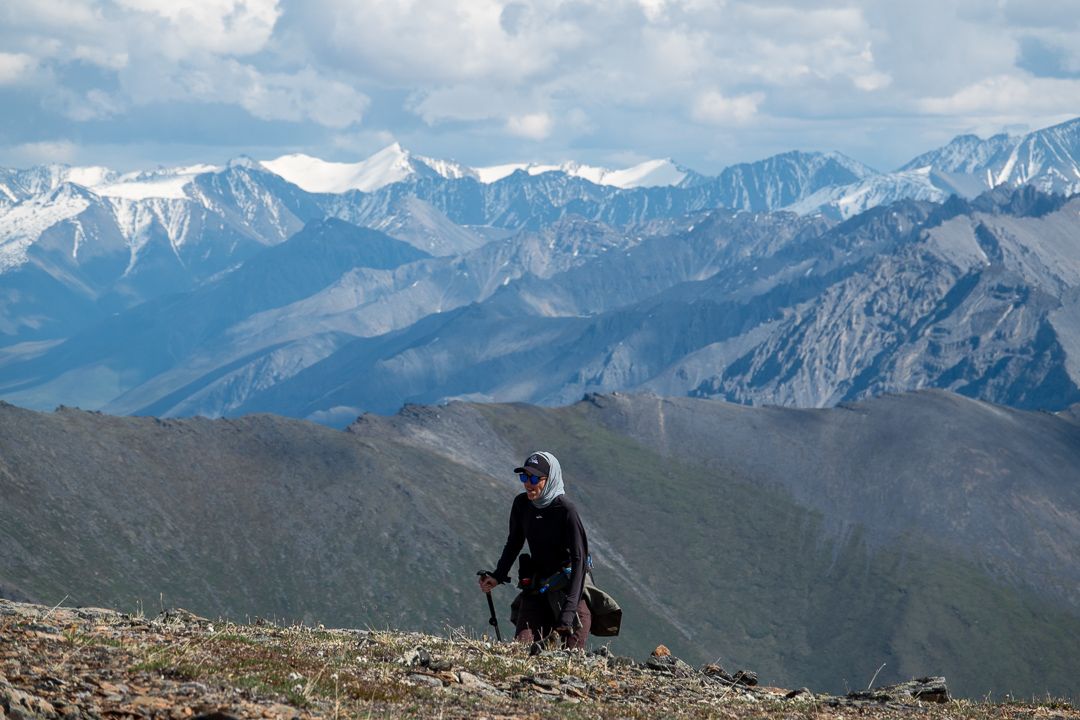
Hiking options range from short walks on tundra benches near camp to longer outings into side valleys, saddles, and high ridges. For guests interested in a bigger day, there are opportunities for off-trail hikes of ten miles or more, including some achievable peaks. These are hiking outings, without technical climbing or rope work. We choose routes based on conditions and the interests and abilities of the group.
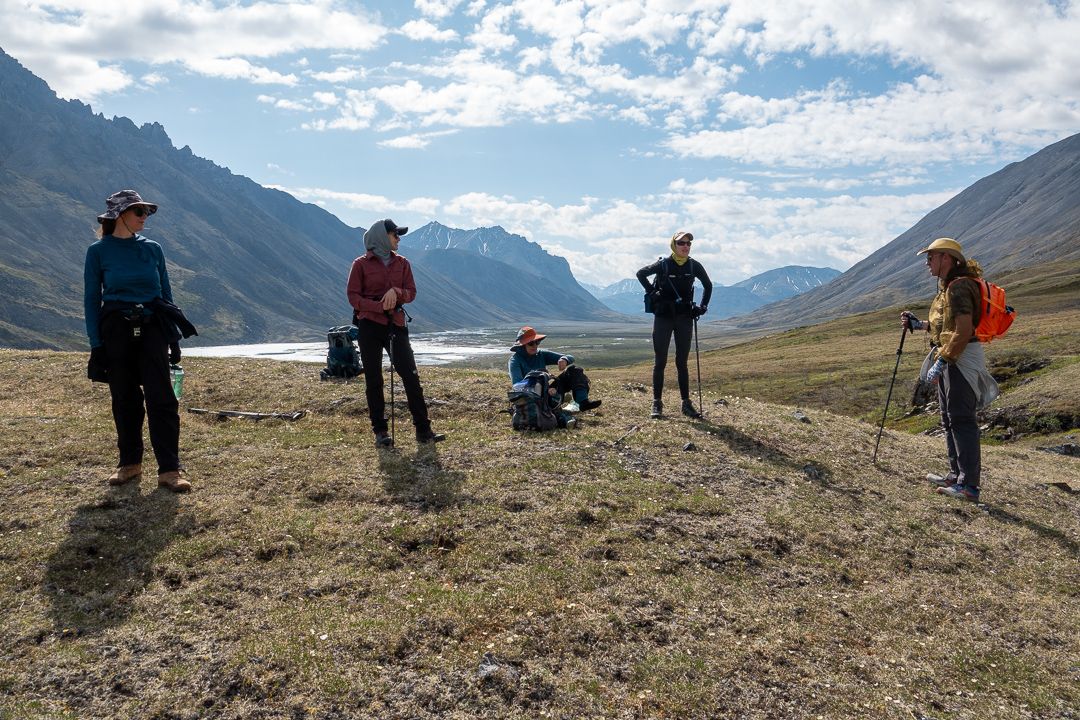
Some days we’ll break camp in the morning and spend much of the day moving downriver. Others may involve only a short float before finding another place worth stopping. And when we find a camp that gives us good access to the surrounding country, we may not move at all. With nine days to cover roughly 40 river miles, there is room in the schedule for full hiking days, shorter walks from camp, time spent watching wildlife, photography, or fishing.
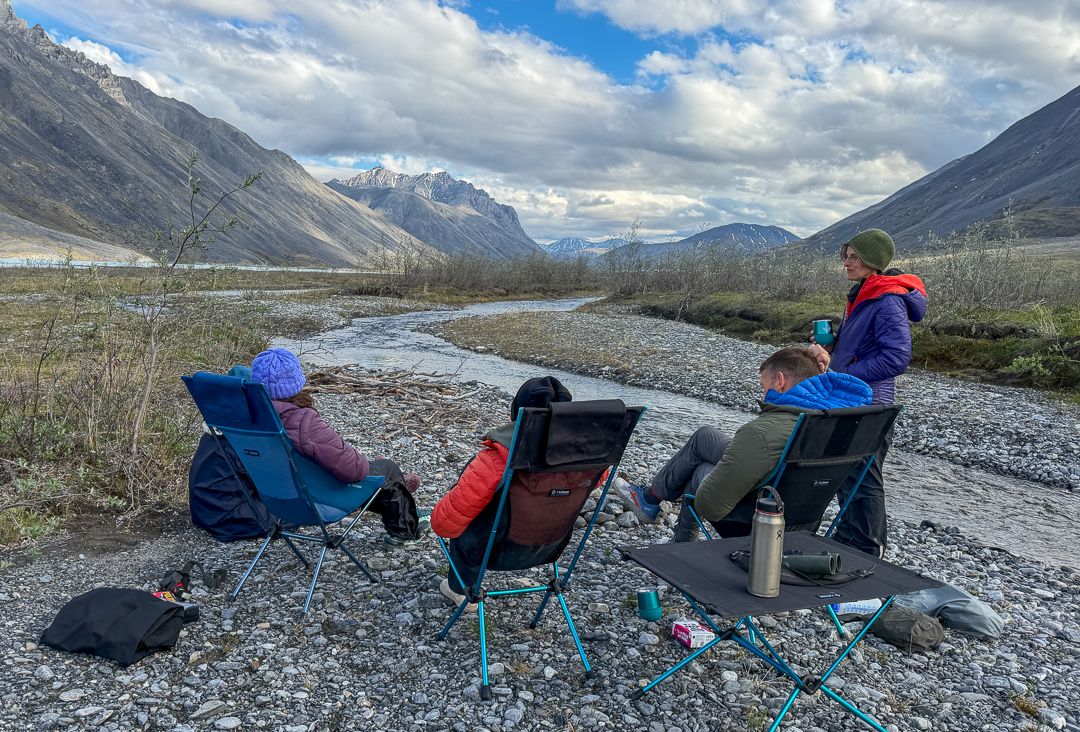
Guides set up tents, prepare meals, and handle camp chores. Two guests share each sleeping tent. Once we reach camp, there is time to take a walk, watch the river, or settle into a chair and enjoy the view.
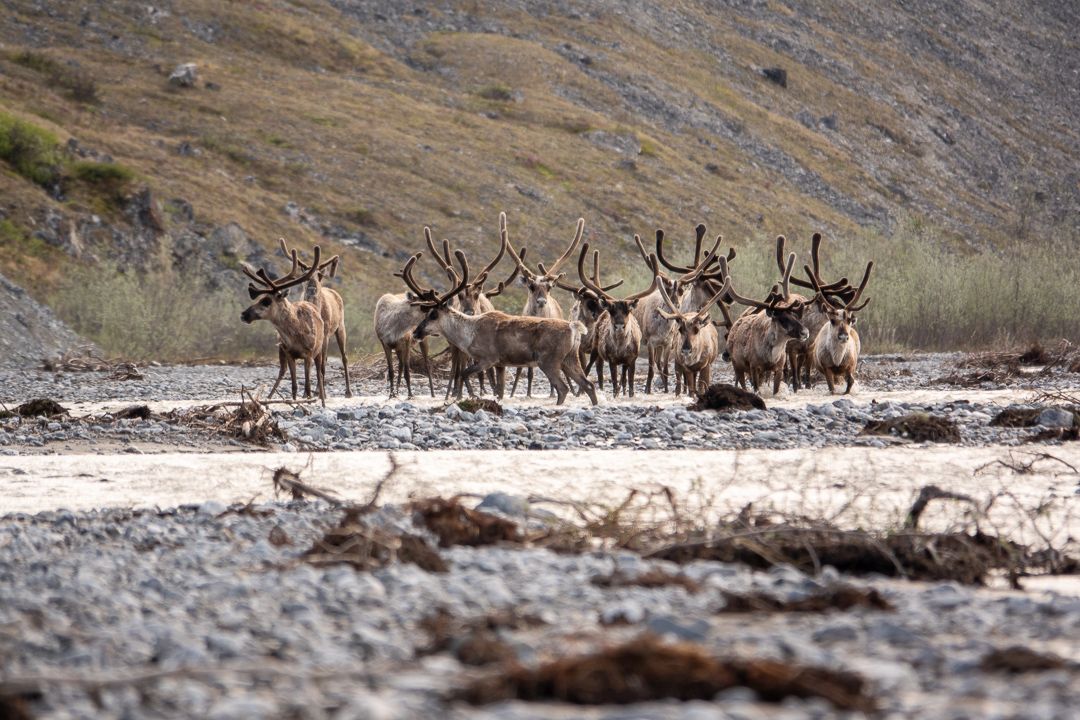
Dall sheep inhabit the surrounding mountains, while caribou, grizzly bears, wolves, and muskoxen move through the broader landscape. What we actually see varies from trip to trip. Sometimes wildlife seems to be everywhere, while at other times this enormous landscape can seem remarkably empty. Part of the experience is simply paying attention to what the country gives us each day.
Summer doesn’t unfold in the Arctic. It explodes. Near the solstice, daylight is effectively continuous, tundra plants and wildflowers are growing and blooming, and animals are taking advantage of a growing season that barely lasts into August.
Signs of the long winter still linger. Snow remains on the higher peaks, and thick fields of aufeis—expansive sheets of ice spanning across parts of the floodplain—can remain along the river into late summer.
The river itself is cold and often swift, especially when swollen with early-season snowmelt or rain. It is generally quite braided, spidering out across a wide, gravelly floodplain carved by Pleistocene glaciers. In some sections, the braids converge into splashy boulder gardens.
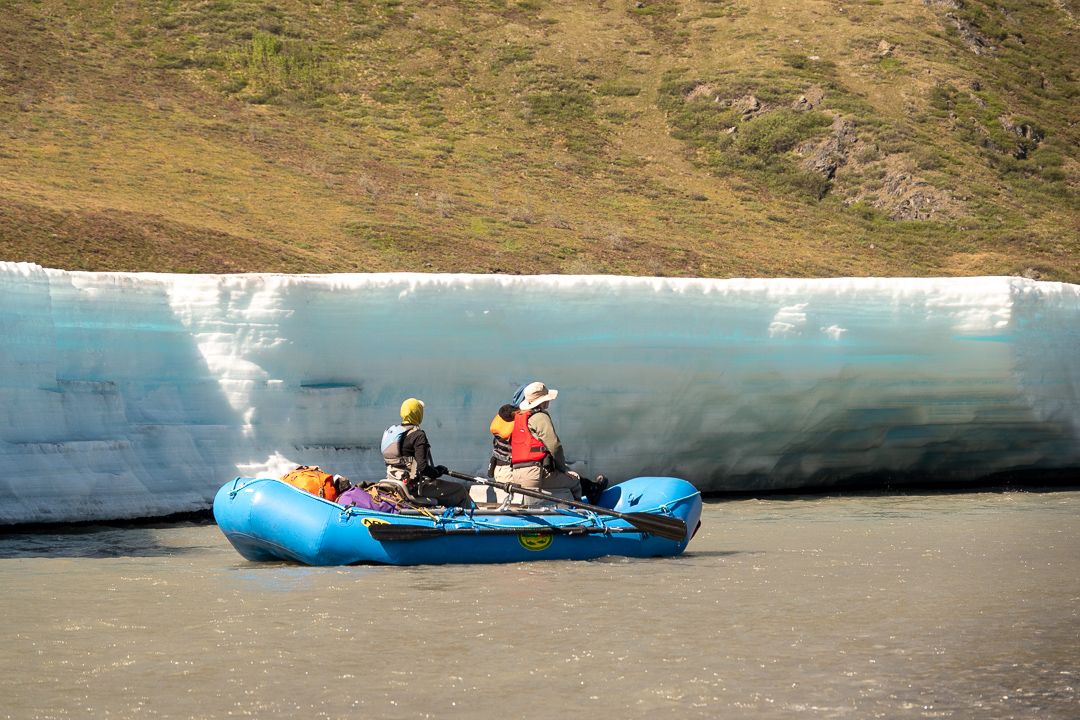
Aufeis forms through winter as flowing water spreads over existing ice and freezes in successive layers. In summer, meltwater carves channels through these thick fields, and the river can run between exposed walls of ice. It is one of the most striking features of the Marsh Fork.
You do not need previous rafting experience to join this trip, but you should be comfortable spending nine days outdoors in a remote environment and physically capable of moving around on uneven terrain.
Hiking is optional and can range from easy walks near camp to long days climbing ridges or peaks. There are no established trails. Travel is generally cross-country over tundra, loose rock, gravel bars, and occasionally steep slopes. The more comfortably you can move through that terrain, the more options you’ll have for exploring away from the river.
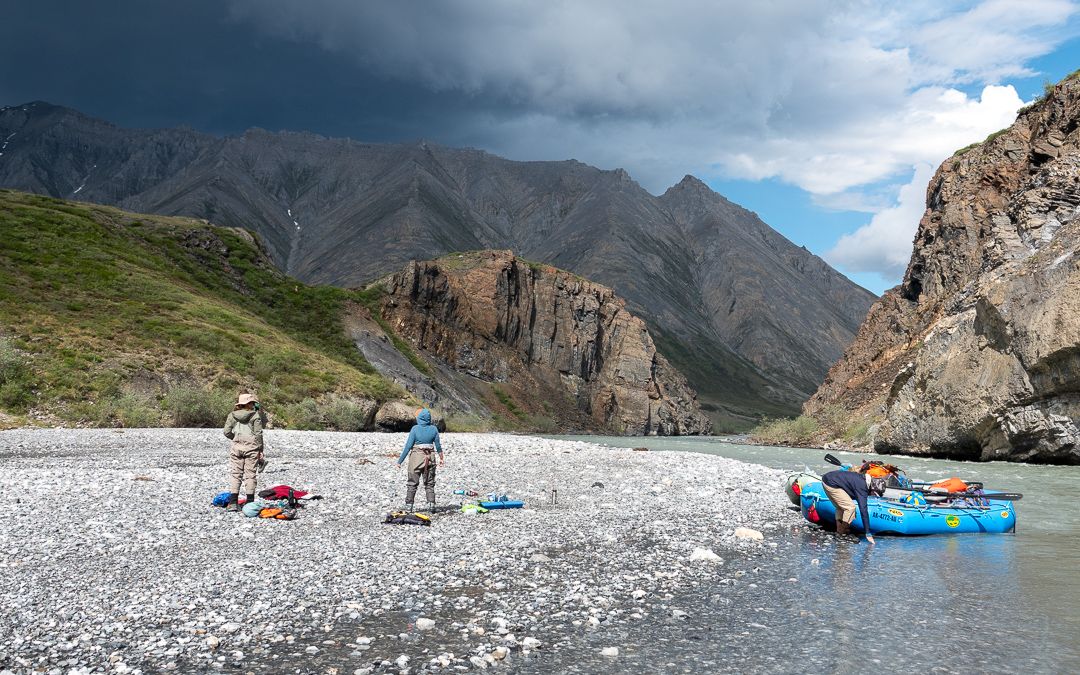
Around camp, guests should be able to get in and out of rafts, carry their personal gear short distances, and negotiate uneven riverbanks. Weather can add another layer to everything. Cold rain, wind, and rapidly changing conditions are normal circumstances in the Brooks Range, even in summer.
The trip begins and ends in Fairbanks, Alaska.
From Fairbanks, we fly north to Coldfoot, our staging point in the central Brooks Range. We spend the night at Coldfoot Camp before flying by bush plane across the range to a remote gravel landing strip on the upper Marsh Fork.
At the end of the trip, a bush plane picks us up near Plunge Creek and returns us to Coldfoot. After a second night at Coldfoot Camp, we fly back to Fairbanks.
Round-trip transportation between Fairbanks and Coldfoot, two nights lodging at Coldfoot Camp (double occupancy), and all bush flights between Coldfoot and the river are included in the trip price.
Bush flying in the Arctic is weather dependent, and schedules occasionally need to change. I provide detailed travel instructions and will help coordinate your arrival in Fairbanks around the trip schedule.
Remote Waters provides each guest with a detailed packing checklist well before the trip, including recommendations for clothing, fishing equipment, sleeping gear, and other personal items needed for Arctic conditions.
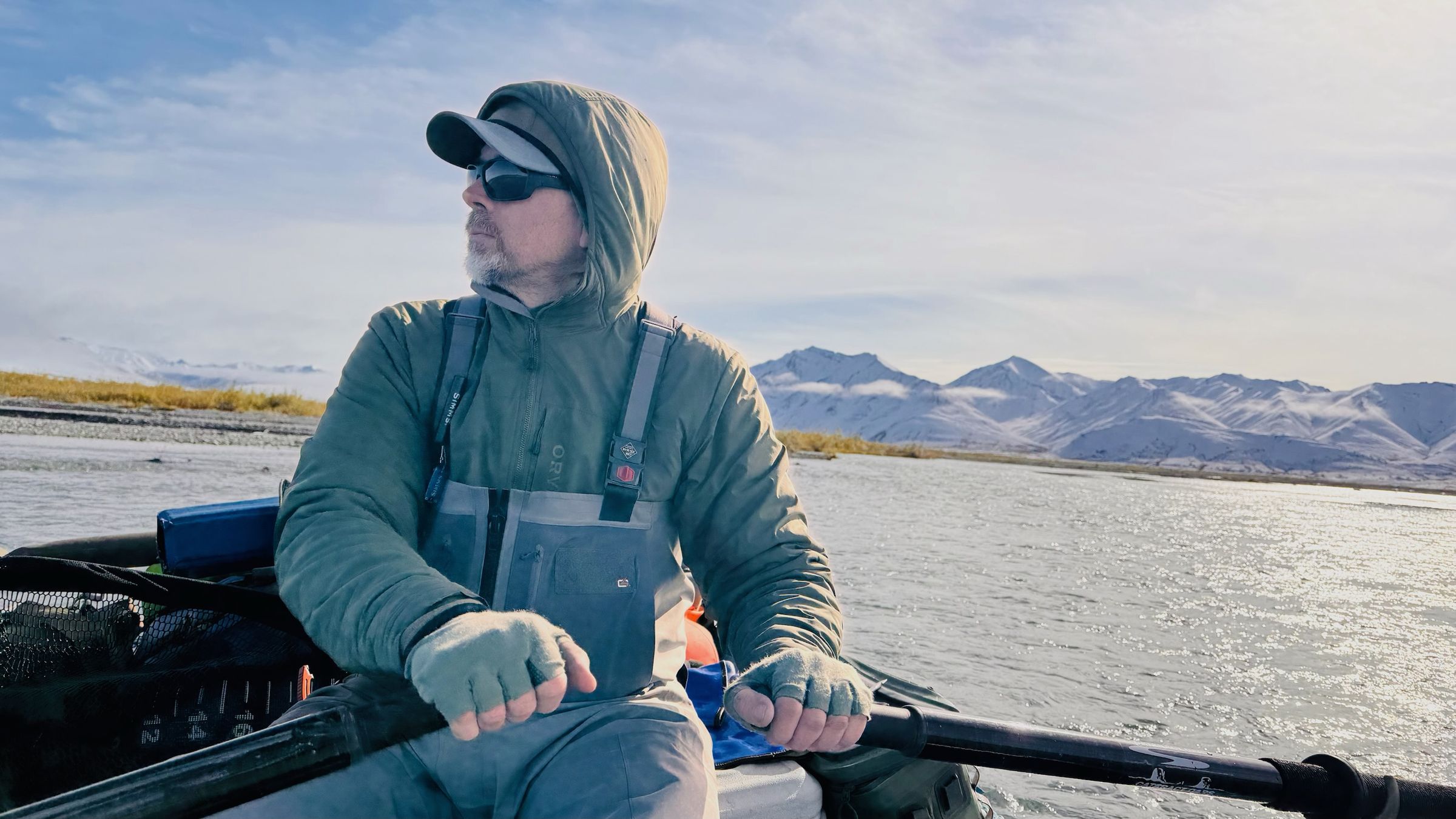
The Marsh Fork is a new offering for Remote Waters in 2027. I first traveled the river on a scouting trip to learn the route firsthand and determine whether it was a good fit for the kind of trips I want to guide. It definitely is. These first guided departures are built around what I found most compelling about the river: the chance to slow down, watch, and immerse in a truly wild place.
I personally guide every Remote Waters trip, so the person you talk with while planning your trip is the person you’ll travel with on the river.
Greg Halbach
Greg Halbach · Owner & Head Guide
Tell us what you are hoping for from a trip and we can talk through the options.