
Fly Fishing for Dolly Varden in Arctic Alaska
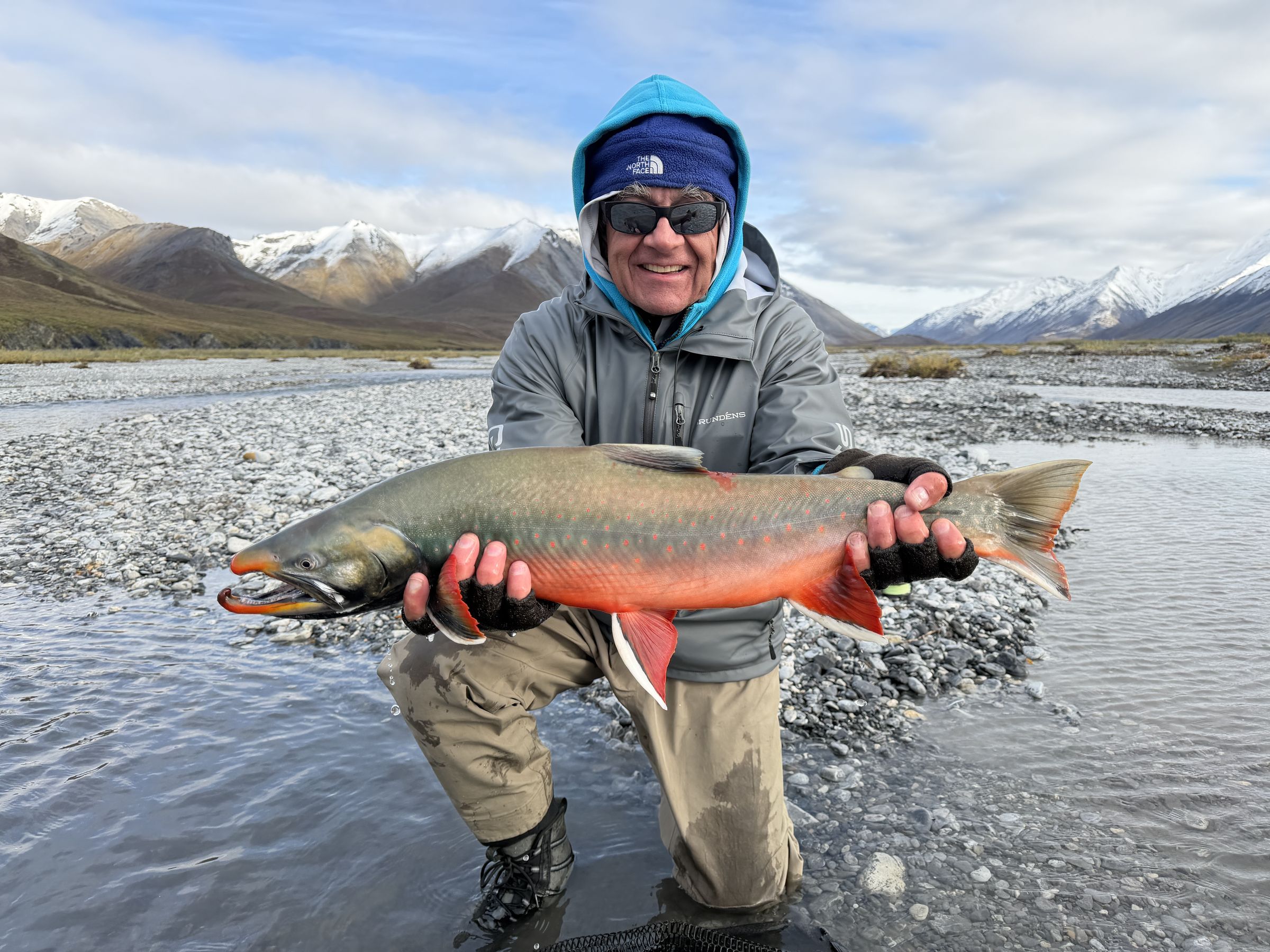
The Ivishak River flows north out of Alaska’s eastern Brooks Range, through the Arctic National Wildlife Refuge and onto the open tundra of the coastal plain. Broad, treeless valleys and rugged peaks make this a striking place to fish and travel.
Our late-August and early-September trips focus on sea-run Dolly Varden moving upstream toward spawning and overwintering areas, with Arctic grayling also found throughout the river. We float and camp our way downstream, with time to fish promising water and explore the surrounding country as conditions and the interests of the group allow.
Remote Waters will offer two guided Ivishak River trips in 2027. Both take place during the late-summer movement of Dolly Varden into the river, but the timing and length of each trip offer a slightly different experience.
Dates
Length
Guided Float
Bush Flight & Shuttle
Total per person
Availability
August 18–27, 2027
10 days / 9 nights
Length
10 days / 9 nights
$6,790
Guided Float
$6,790
$4,710
Bush Flight & Shuttle
$4,710
$11,500
Total per person
$11,500
4 seats
Availability
4 seats
August 30–September 9, 2027
11 days / 10 nights
Length
11 days / 10 nights
$7,190
Guided Float
$7,190
$4,710
Bush Flight & Shuttle
$4,710
$11,900
Total per person
$11,900
Fully booked
Availability
Fully booked
Prices are per person, based on a double-occupancy booking. Solo bookings may be possible at an adjusted rate, or on a conditional basis if another solo guest can be matched for the same departure.
Includes the bush flight from Coldfoot to the river and a shuttle from the takeout to Deadhorse. Travel to Coldfoot and onward from Deadhorse, and lodging before and after the trip, are additional.
Location
Arctic National Wildlife Refuge, North Slope of the Brooks Range
Trip length
10–11 days for 2027 departures
Group size
Maximum four guests, with no more than two guests per guide
Primary fishing
Dolly Varden and Arctic grayling
Fishing methods
Primarily streamer fishing for Dollies; streamer and dry-fly opportunities for grayling
Access
Wheel-plane landing on a remote bench strip on the upper Ivishak; vehicle pickup at the Sagavanirktok River takeout
Off-river opportunities
Hiking and exploring tundra benches, side valleys, and surrounding mountain terrain
Longer daylight and generally milder conditions
This trip begins in the second half of August as increasing numbers of Dolly Varden are moving into the upper Ivishak. Conditions are generally milder than they are later in the season, with longer daylight and the Brooks Range just beginning its transition toward fall. The ten-day itinerary gives us time to fish and, depending on conditions and the interests of the group, spend a day or two hiking and exploring.
Further into fall, with colder weather
Early September means even more Dollies are likely to have moved into the upper river, and fall is considerably further along on the North Slope. The tradeoff is colder and less predictable weather, with freezing temperatures and snow increasingly possible. This is our longest Ivishak trip of the season. Depending on conditions and the interests of the group, we may spend a day or two exploring off the river. If the surrounding slopes are blanketed in snow, we’ll just have to make a few extra casts.
Trip dates and lengths vary from season to season. Custom dates may be possible depending on scheduling and aircraft availability.
Dolly Varden are the primary fishing focus on the Ivishak. Each summer, Dollies leave the saltwater of the Arctic Ocean and move into the Ivishak, with numbers building through August and into September. In the upper river, many of the fish we encounter are large, mature Dollies moving toward spawning areas. As the season progresses, these fish become increasingly colorful, developing the deep orange and red coloration associated with spawning fish.
Streamer fishing is the primary method for targeting Dollies. We’ll concentrate our efforts in slower side channels, deeper pools, and other holding water where we can fish from shore. Swinging and stripping streamers with 6- and 7-weight rods covers most situations. When fish are concentrated, several large Dollies may come from the same piece of water before we continue downstream.
Arctic grayling are found throughout the system and provide a different style of fishing. They readily take smaller streamers while we’re fishing for Dollies, but can also provide good dry-fly fishing when conditions are right. A lighter rod in the 3- to 4-weight range is a great setup for fishing dry flies over rising grayling.
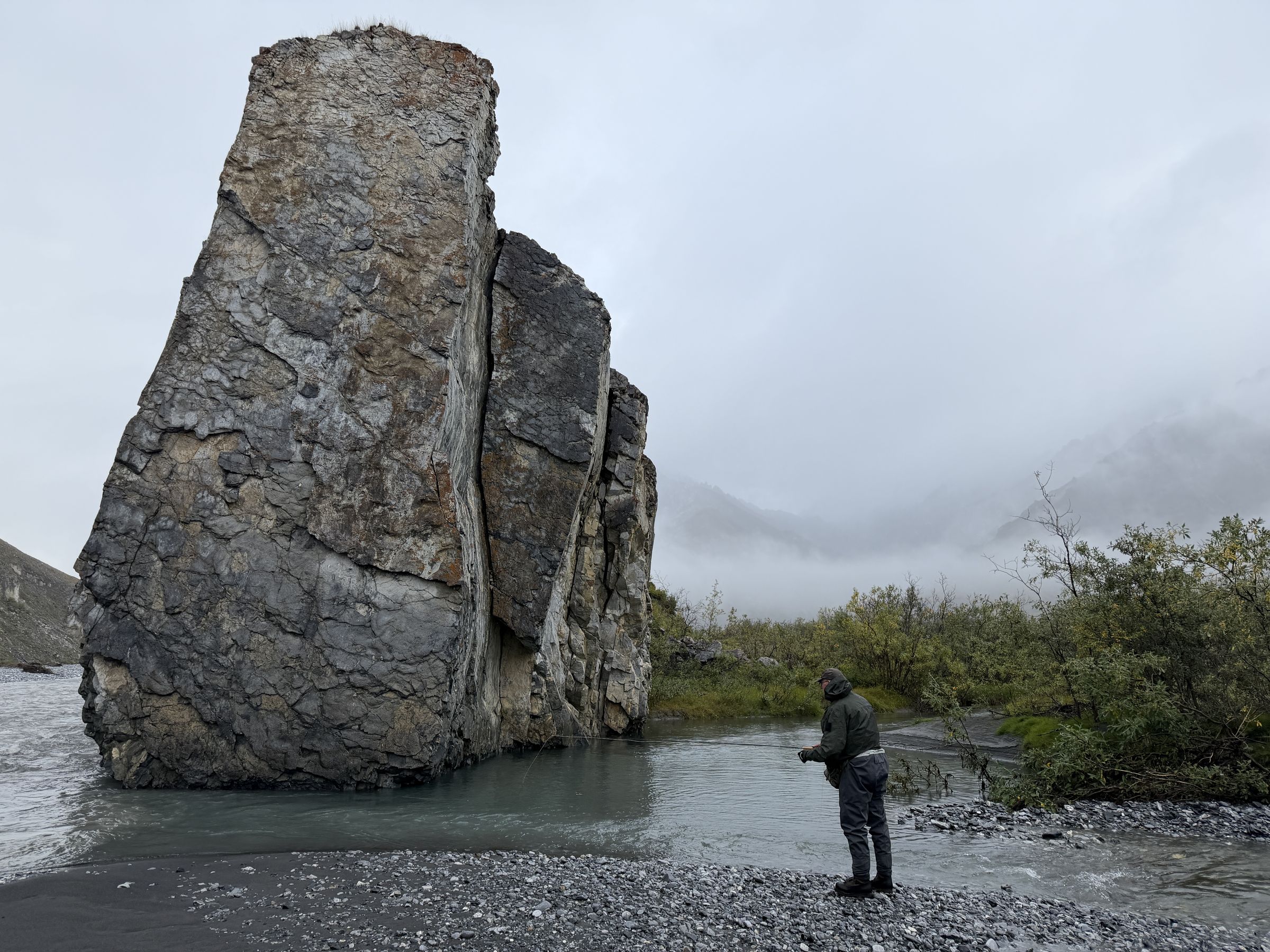
Our fishing efforts are concentrated primarily in the upper, mountain section of the river. The upper river is a very manageable size for working with a fly rod, and the largest fish of the trip usually come from this section. Fish are unevenly distributed throughout the river, so we move between promising runs, pools, and side channels, spending time thoroughly fishing the best spots.
Our rafts are set up drift-boat style, with one angler in the front and another in the back, giving each angler plenty of room to prospect for fish as we cover miles.
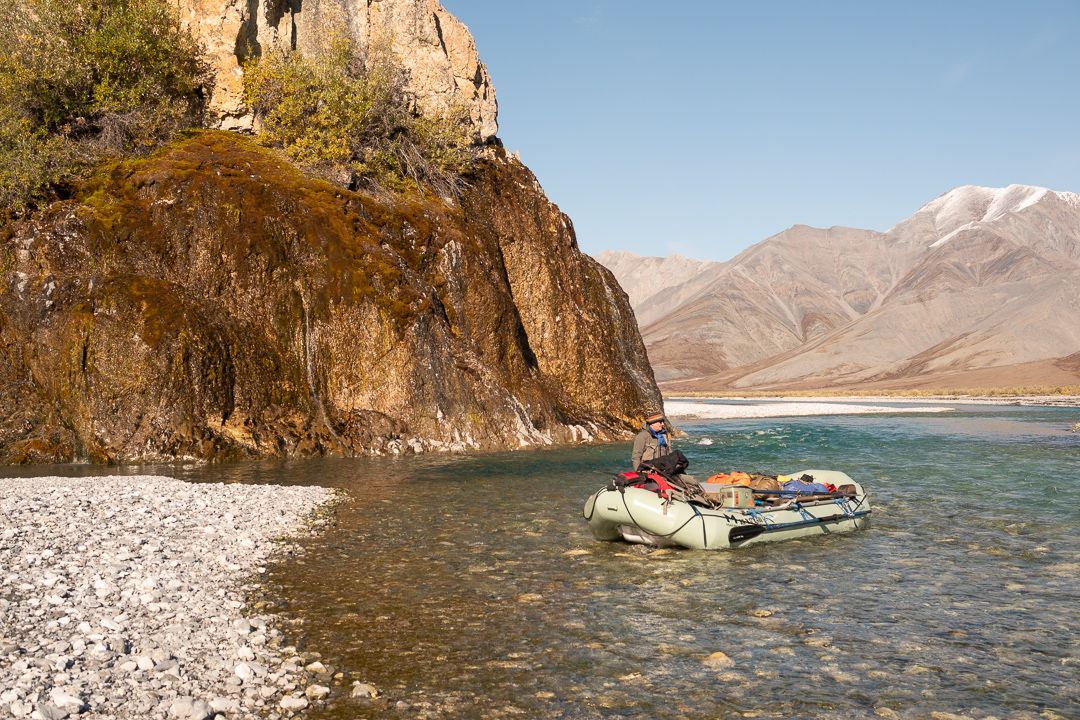
The trip begins with a bush flight to the upper Ivishak, where we land on a bench adjacent to the river and begin our float north toward the Arctic Ocean. The upper river is relatively small, flowing over a broad gravel floodplain. In places the floodplain stretches nearly a mile across, while in others it constricts to just a couple hundred yards. Exposed geology surrounds us at all times, from towering mountain peaks to riverside cliffs an arm’s reach away.
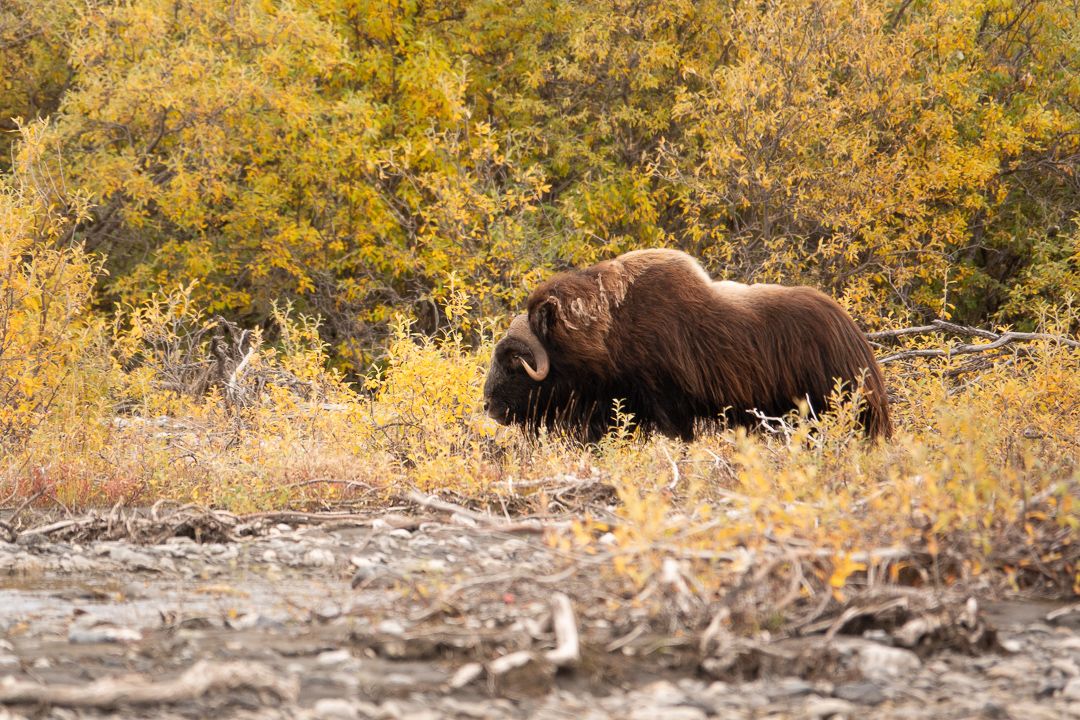
Tundra benches rise directly from the river, while side valleys lead back into the Brooks Range. The open country surrounding the upper Ivishak offers opportunities to follow a side valley, climb to a nearby ridge, or simply get some elevation above camp. The hardest part can be pulling yourself away from a chance at another big Dolly in full spawning regalia.
Days on the river are deliberately flexible. We generally move camp downstream each day, but the option to spend a couple of nights in the same camp is there. Productive pools and side channels may keep us in one place for a while, and good weather can create opportunities to get out and explore away from the river. A typical day on the river covers 8 to 10 miles, with plenty of stops to fish, eat lunch, and stretch the legs. The exact pacing and itinerary are shaped around the expectations and goals of the group.
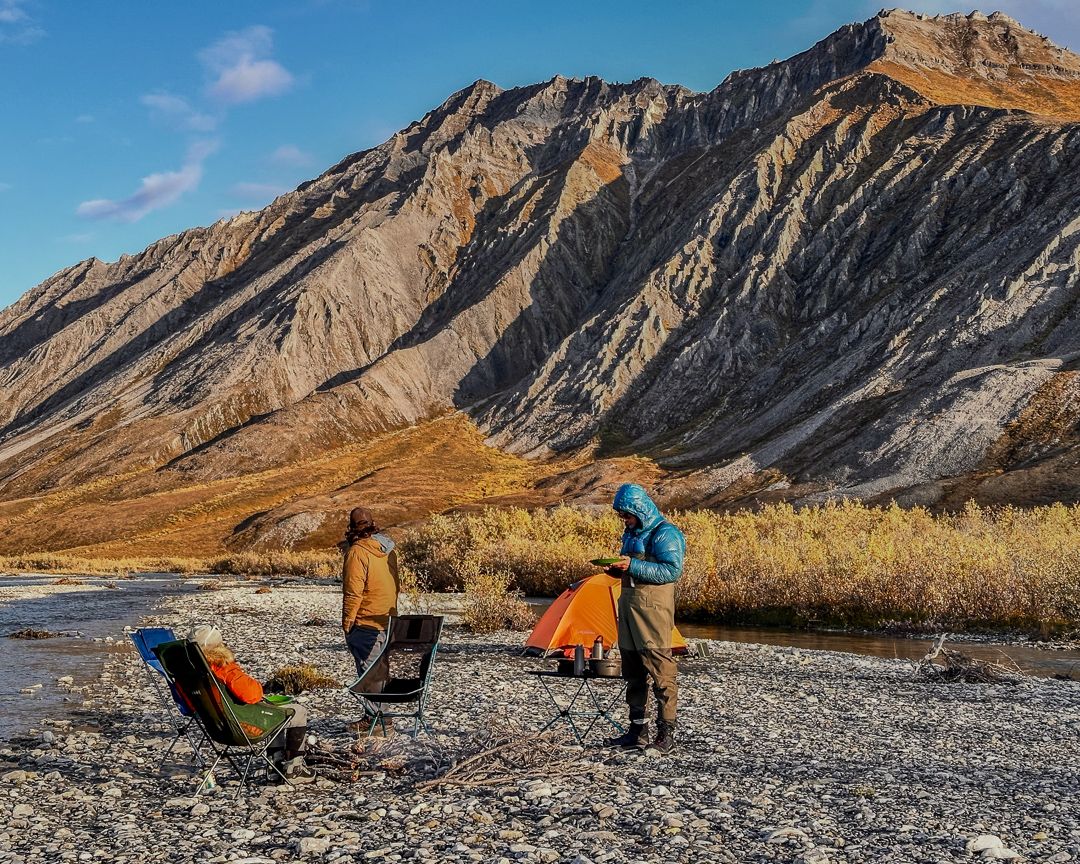
Once we reach camp, guides set up tents and prepare dinner. Guests can keep fishing, take a walk, or settle into a chair by the river. Two guests share each sleeping tent.
The Ivishak exits the mountains rather abruptly and flows through low foothills where it combines with the Saviukviayak River, effectively doubling in size. Rolling hills and riverside cliffs dominate the surrounding views, while the river alternates between numerous braided channels and large consolidated channels. The lower river exposes more unique geology, including sections of exposed permafrost. By the time we arrive at the confluence with the Sagavanirktok River, the rolling hills have given way to the flat and expansive terrain of the Arctic coastal plain. The change from mountain river to open Arctic tundra is a striking transformation.
Ivishak trips do not require exceptional fitness or technical outdoor skills, but guests should be comfortable spending ten or more days living and traveling outside in remote Arctic conditions. Getting in and out of rafts, walking over uneven gravel bars and tundra, crawling in and out of tents, and dealing with cold, wet weather are all part of the trip. Guides take care of camp chores like setting up tents, cooking, and boat handling.
Hiking is optional and can be adjusted to the interests and abilities of the group. The open terrain surrounding the upper river provides opportunities ranging from short walks above camp to longer hikes into side valleys or onto nearby ridges. Tundra can be uneven and deceptively tiring, but we are not following a fixed hiking itinerary or trying to reach predetermined objectives.
Weather is probably the biggest physical consideration. Even in August, temperatures can drop below freezing, and by early September snow is a real possibility. Guests need appropriate clothing and equipment and should arrive prepared to remain comfortable in cold, wet, and windy conditions for extended periods.
Reasonable mobility, balance, and flexibility when weather changes are important for enjoying the trip.
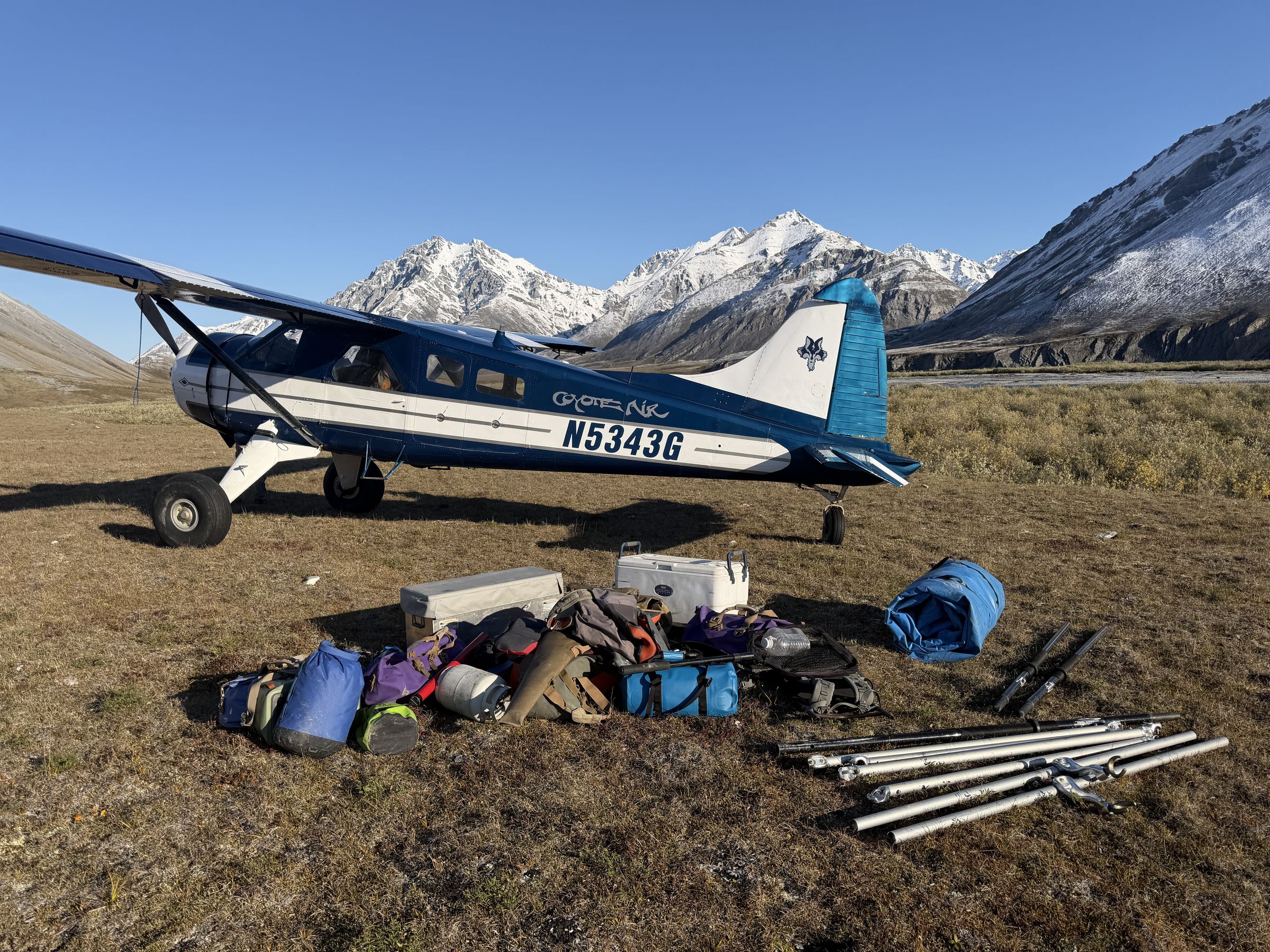
Ivishak trips stage from Coldfoot, a small community on the Dalton Highway about 250 miles north of Fairbanks. On the morning of the first day, guests fly from Coldfoot into the upper Ivishak by bush plane. The flight crosses the heart of the eastern Brooks Range, providing unmatched views of Alaska’s northernmost mountain range. Keep your camera handy. Aircraft and weather dictate the exact timing, and flexibility is always part of bush travel in the Arctic.
Over the next week and a half, we’ll float, fish, and explore our way down approximately 80 river miles. Our takeout is a boat launch on the Sagavanirktok River, where we meet a vehicle for the drive north to Deadhorse. Guests can overnight there before flying south the following day. This makes the Ivishak somewhat unusual among our trips: we fly into the wilderness from Coldfoot but finish on the road system near the Arctic coast, rather than returning by bush plane.
Travel to and from Alaska, lodging in Fairbanks, Coldfoot, and Deadhorse, and commercial flights between these locations are not included in the trip price. Remote Waters provides detailed travel instructions and helps coordinate the necessary connections before the trip.
Remote Waters provides each guest with a detailed packing checklist well before the trip, including recommendations for clothing, fishing equipment, sleeping gear, and other personal items needed for Arctic conditions.
The North Slope of the Brooks Range was a revelation for me. After several years of guiding on the Kobuk River farther south, I made my first exploratory trip on the Ivishak and was taken aback by the austerity and beauty of the landscape. The open spaces and endless vistas appealed instantly to someone who grew up in the Arizona desert.
But at the same time, I never quite feel fully at home and comfortable in this place. It has an edge to it that heightens the senses, and also the experience. Every season I look forward to those first steps back on the tundra. And I wonder just a little bit what new challenges it has in store.
Greg Halbach
Greg Halbach · Owner & Head Guide
Tell us what you are hoping for from a trip and we can talk through the options.